written by Eric D. Berry / sponsored by Explore Charleston
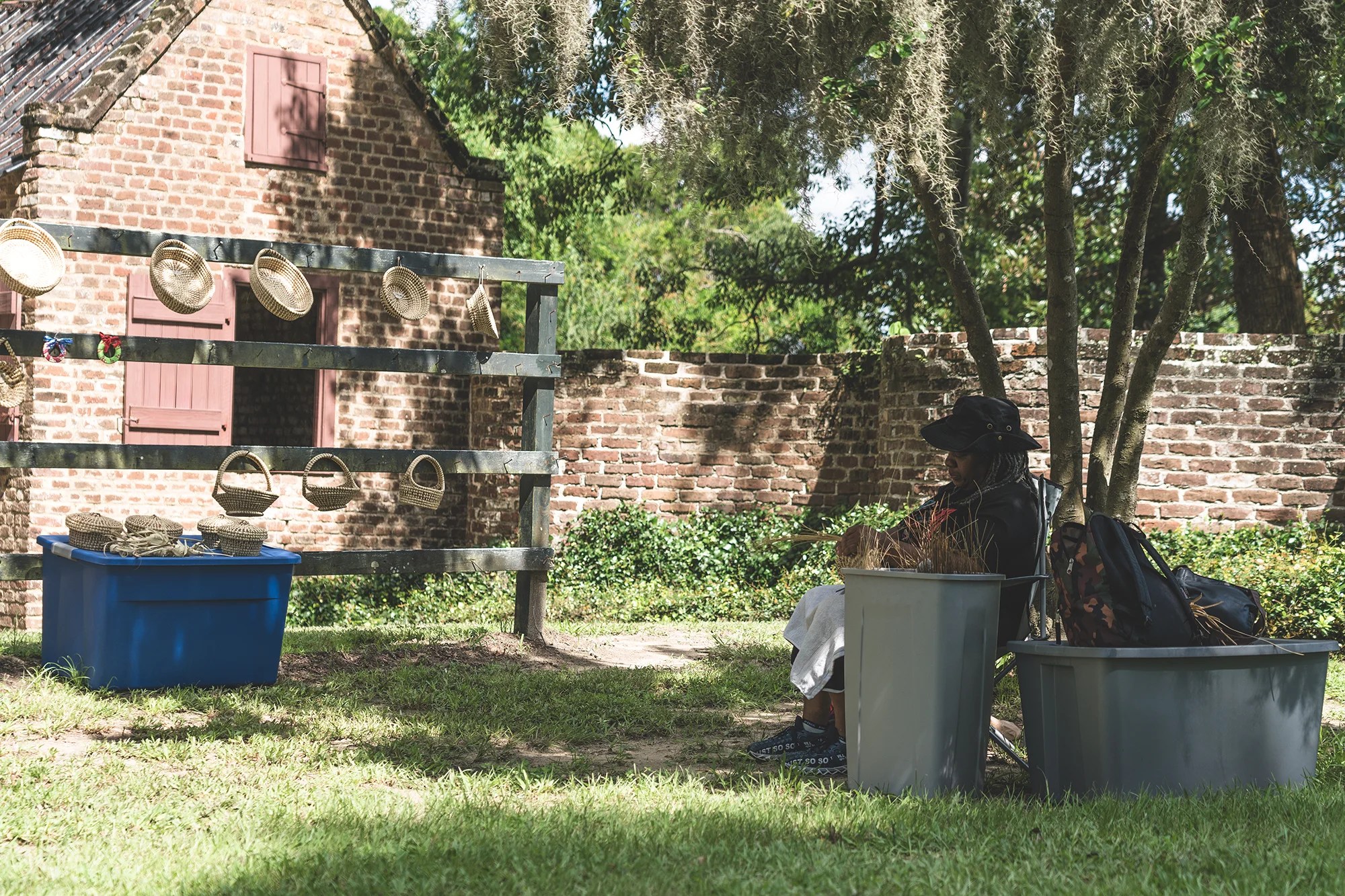
Orb-weavers are easy to miss as eyes drift toward the blossoming magnolias and the grand rows of Southern Live Oaks that frame the entrance to Boone Hall Plantation. On this humid Charleston morning, an araneid threads its trap from one of the oaks, hoping to snare its first meal. The precision of its woven deathtrap is striking, even as sweat beads on the brow. Just below, another weaver comes into view—not spinning silk in the branches, but shaping sweetgrass into form beneath the fickle shade of a tree.
This weaver bends earth into art through the timeless craft of sweetgrass basket making.


Several miles away, at the entrance to Charleston Market, Corey Alston, one of the city’s most prominent weavers, works beneath the shade of an awning. His sweetgrass baskets are featured in the International African American Museum, Charleston International Airport, and at this same market—where sweetgrass wares have been sold for hundreds of years.
“I learned to make sweetgrass baskets as a teenager,” Corey recalls. “I learned from my girlfriend at the time—now my wife of 24 years. The children learn at a very young age, because if they wait until they’re adults, they kind of hate it. It’s very time-consuming, extremely tedious. Harvesting the grasses tears up our hands, but that’s all part of the art.”
That art now commands the attention of museums and collectors alike. With prices ranging from hundreds to thousands of dollars, sweetgrass weaving has become a thread in Charleston’s cultural fabric—and a living link to history.
The Gullah people, descendants of enslaved West Africans brought to the Carolinas more than three centuries ago, have preserved this practice across generations. Alongside their language and foodways, basket weaving endured. On Lowcountry rice plantations, enslaved Africans applied their knowledge of agriculture and craft to create baskets for sifting and storing America’s first great cash crop: Carolina Gold rice.
“These decorative baskets that we see are a legacy of the brilliance of enslaved African people, in that they brought the weaving practice with them,” says Malika N. Pryor, chief learning and engagement officer at IAAM. “Initially, it was much more utilitarian. They were fan baskets, used in the rice-processing component of cultivation, and the Gullah Geechee in particular held that tradition and continued to evolve it.”


Today, Gullah artisans like Corey—and the weaver beneath the oak at Boone Plantation—carry forward that tradition, threading past into present. “You see this reclaiming within the Gullah Geechee community of that legacy and heritage—and this entire cottage industry that folks are finally benefiting from financially. You see sweetgrass in shoes; it’s evolved in this really beautiful artistic way,” Pryor adds.
Like the orb-weaver spinning above Boone Plantation, history can be easy to overlook—even when sliding into a pair of Gola Sweet Grass sandals. Created by Jocelyn Patterson to honor her grandmother and Lowcountry Gullah roots, the sandals are just one way sweetgrass art comes alive in Charleston.
5 Places To Experience Sweetgrass Baskets
Charleston International Airport
The first place to encounter this art—alongside works by legendary Gullah artist Jonathan Green—is Charleston International Airport. On luggage carousels in the arrivals terminal, strawgrass weaving by Mary Jackson is on display. Taught by her mother and grandmother at four years old, Jackson has devoted her life to preserving the Lowcountry basket-making tradition. Her work has been featured in the Philadelphia Museum of Art; the Renwick Gallery of the Smithsonian American Art Museum; the Museum of Arts and Design in New York; the Museum of Fine Arts, Boston; and the Museum of African American History in Detroit.
IAAM
The International African American Museum is a must-visit. Inside the Gullah Geechee Gallery, you’ll find sweetgrass weaving by Corey Alston, a fifth-generation artisan dedicated to preserving this Lowcountry tradition. The museum also served as the backdrop for a historic moment on January 19, 2025, when President Joe Biden visited on his final full day in office. Congressman Jim Clyburn presented the president with a handwoven sweetgrass rice fanner crafted by Corey’s wife, Karen Alston, with contributions from their daughters, Yesmine and Corren—a gift celebrating Gullah heritage and the enduring legacy of sweetgrass weaving.
Located at historic Gadsden’s Wharf—the entry point for thousands of enslaved Africans—IAAM immerses visitors in African American history, culture, and Gullah Geechee heritage.
Charleston City Market
For sweetgrass art closer to downtown, the Charleston City Market is lively with bartering vendors offering Gullah works. Step through the Meeting Street entrance, and you may be greeted by Corey or his daughter, welcoming tourists and locals as they wander the arcade. For 184 years, this landmark has been one of the most definitive places in the Carolinas to experience and purchase Gullah sweetgrass baskets. The tradition isn’t just on display—you can often watch artisans weaving right at their stalls.


Highway 17
South of Charleston, Highway 17 offers another slice of sweetgrass culture. Small towns and roadside stands showcase the art alive and accessible. Pull off the highway, and you can watch grasses being harvested, braided, and coiled into intricate forms—connecting past to present in real time. It’s not just shopping; it’s witnessing a living craft, where the rhythm of hands and the scent of the marshland tell stories older than the road itself.
Explore Charleston Visitor Center
Many city tours begin at the Explore Charleston Visitor Center. Just across the street stands master blacksmith Philip Simmons’s famed Peacock Gate, one of hundreds of intricate ironworks he created across the city. Inside, visitors will find a selection of sweetgrass baskets—a quieter, curated way to experience the craft if you don’t have time for IAAM or the City Market.
Conclusion
Wherever you go in Charleston, sweetgrass is a subtle but ever-present thread—inside shops, hotels, restaurants, museums, and homes. These pieces connect the city to its heritage, a legacy as much West African as it is American.


Contact Sepi
Phone: 641-754-0072
Email: contact@sepitravel.com
8553 N Beach Street Suite 138
Ft Worth, TX 76244
Sepi LLC © All rights reserved 2025.